
The Plaque on the Wall
A small memory that points to a much bigger shift

I began writing this weekly newsletter back at the end of January last year. This is Issue 66 and, with the exception of one week when I was under the weather, I’ve turned up in your inbox every week since then.
In that time, the focus has shifted. What began as an exploration of personality has gradually evolved into something more specific: the idea of matching readers with fiction that truly fits them. And as you might imagine, the work behind that has been growing steadily more absorbing.
So, after next week’s issue, which will take us to the end of April, I’m taking a short break from weekly posting. I’ll pick things up again when there’s more to share.
Before that pause, two things.
First, a sincere thank you. For reading, for responding, and for helping shape this into something that feels like a real community. The comments each week have become an essential part of what this is.
Second, a small reflection.
Thirteen years ago, before moving to California, I was living in Peterborough, in the UK. I used to visit the city’s central library regularly. Next to its newer building stood an older one (the original library) with a plaque on its wall acknowledging the generosity of Andrew Carnegie, who funded it back in 1906.
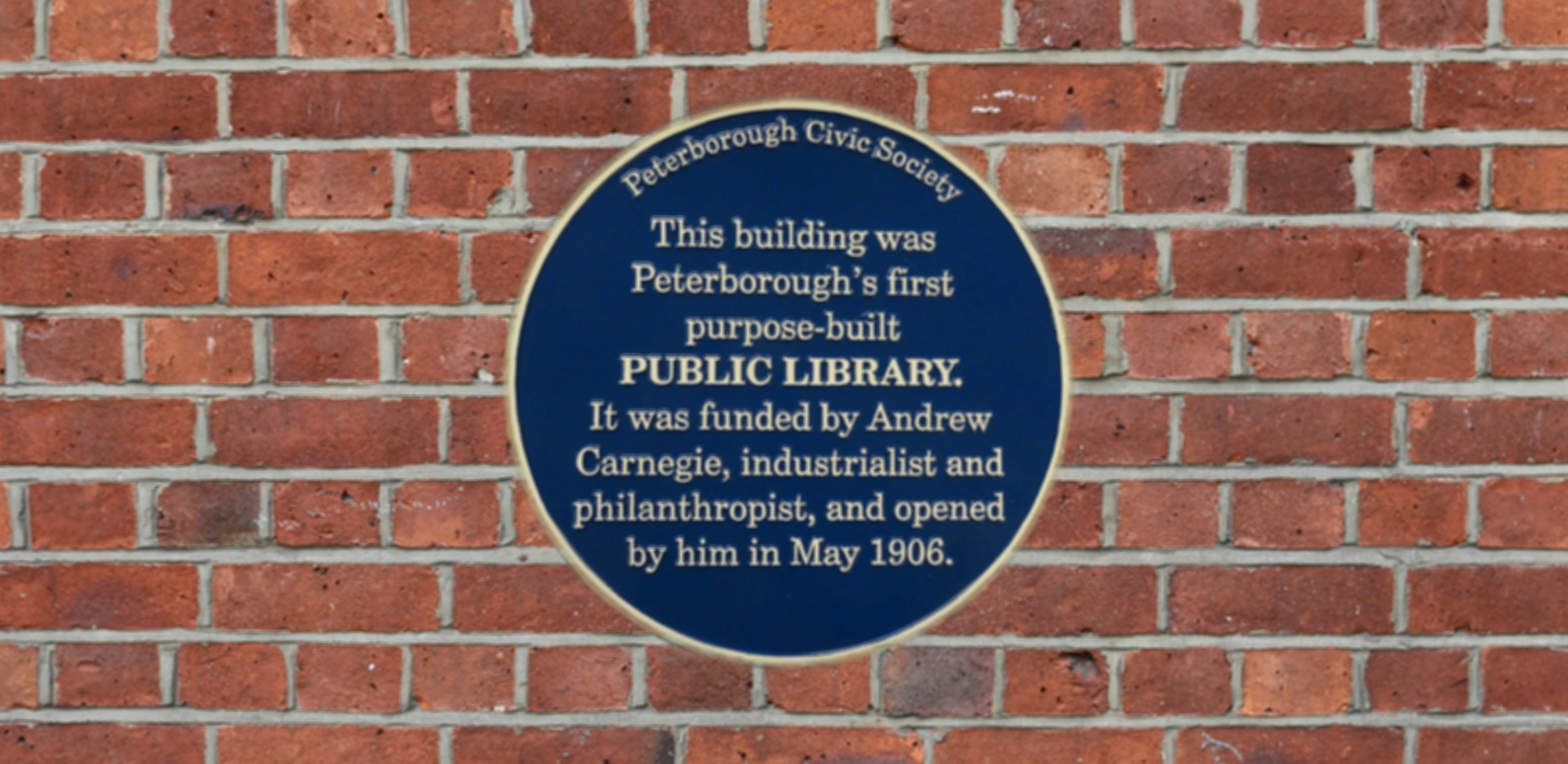
At the time, I remember wondering why on earth Carnegie, an industrialist who made his fortune in American steel, had chosen to build a library in Peterborough of all places.
It turns out that Peterborough wasn’t unusual at all.
Between the late 1800s and the early 1900s, Carnegie funded more than 2,500 libraries across the English-speaking world: over 1,600 of them in the United States, and hundreds more in the UK, Canada, and beyond. His approach was surprisingly structured. He didn’t simply give money away. Instead, towns had to meet certain conditions: they had to provide the land, commit to maintaining the library through public funding, and – crucially – agree that the library would be free for everyone to use.
That last point mattered deeply to him.
Carnegie had grown up in a poor family in Scotland and received little formal education. But as a boy, he was given access to a private library belonging to a local benefactor. It was, by his own account, transformative. He later described libraries as “cradles of democracy,” places where anyone, regardless of background, could educate themselves and reshape their future.
There’s something else really interesting about his model. By requiring communities to invest in their own libraries, he ensured they weren’t just gifts. They were partnerships. The buildings may have carried his name, but their survival depended on local commitment. Many of them, like the one in Peterborough, are still in business more than a century later.
It’s hard not to see a parallel here.
At one level, libraries solved a problem of access: how to help people find books in a world where books were scarce. Today, we face almost the opposite problem. Books are abundant; overwhelmingly so. Thousands are published every week. And the challenge is no longer access, but finding something that truly fits.
In a small way, that’s the problem I’ve found myself drawn to.
And perhaps that’s why the memory of that plaque has stayed with me.
A wonderful man, Carnegie - ditto you, Jon! I worked in a Carnegie library in Ramsgate - sadly burned down by a mad local heritage-hating arsonist! And we have one in Kendal. The NY podcast this week laments the lack of philanthropy - and tax contributions, from today’s US super-rich.
I will miss your voice in my Sunday morning emails, but understand your new pursuit is a large undertaking and requires more mental space. I’m very excited for you and want to remind you that I am (we are) here to support you and hear about the direction your idea is taking.
Hooray for Carnegie, and those like him wh lifted up others once they found their own way.
Hope to hear from you soon!